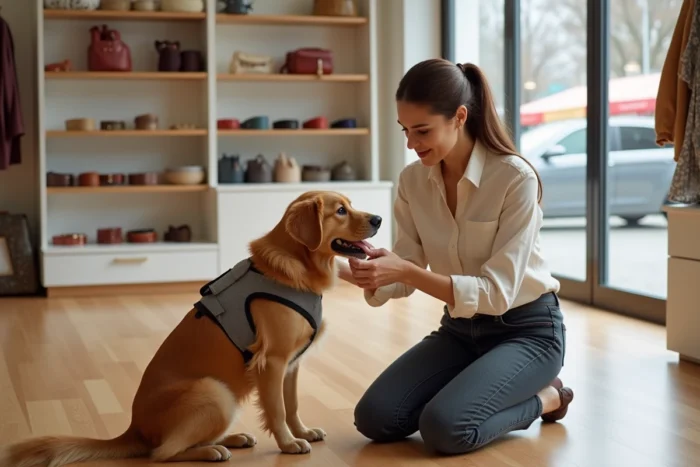
The choice of a canine accessory is based on biomechanical and textile criteria that most consumer buying guides overlook. Adapting a harness, bedding, or coat to the size and morphology of a dog requires a technical understanding of materials, adjustment systems, and finishes, well before considering color or pattern.
Dog Harness: Biomechanical Criteria Before Looks
An ill-fitting harness causes friction at the sternum and armpits, areas where canine skin is thin and poorly protected by fur. The starting point is not the S, M, or L size indicated by the manufacturer, but the chest circumference measured behind the elbows, at the widest part of the thorax.
We recommend prioritizing models where the belly strap is shifted towards the back of the sternum. This Y-shaped design frees the shoulder joint and does not restrict movement. H-shaped harnesses, where the strap runs horizontally across the chest, limit the range of motion in dogs with deep chests (greyhounds, shepherds).
In terms of materials, high-density woven nylon straps remain the benchmark for abrasion resistance. Neoprene or breathable mesh linings add appreciable thermal comfort, especially in summer. Zinc alloy buckles resist corrosion better than acetal plastic buckles, a detail to check if the dog swims regularly.
Today, we find harnesses that combine this ergonomic rigor with refined finishes on the site www.la-fibre-caline.fr, where the ranges combine technical straps and patterned fabrics without sacrificing adjustments.

Dog Bedding: Sizing and Foam Density
Measure the dog in a lying position, then add twenty to thirty centimeters in each direction: this rule, adopted by several brands since 2024, replaces the old reflex of choosing a bed based solely on the animal’s weight. A medium-sized dog that sleeps curled up needs a diameter smaller than that of a dog that stretches out fully.
The density of the foam determines the lifespan of the bedding and joint support. Memory foam offers superior cervical and lumbar support compared to standard foams, a marked advantage for older dogs or breeds predisposed to dysplasia. Models with raised edges allow the dog to rest its head, reducing cervical tension during sleep.
Covers and Textile Care
A removable and machine-washable cover is not a bonus; it is a prerequisite. Water-repellent fabrics treated without PFC (perfluorinated compounds) limit the absorption of saliva and sebum without posing toxicity issues with prolonged contact. Dark colors better conceal dirt, but lighter shades allow for quicker detection of parasites.
- Check that the zipper is hidden or protected by a flap to avoid mouth injuries if the dog chews.
- Prefer silicone non-slip bottoms rather than plastic dots, which wear out in a few months on hardwood floors.
- Opt for filling certified Oeko-Tex or equivalent, guaranteeing the absence of harmful substances in the fibers.
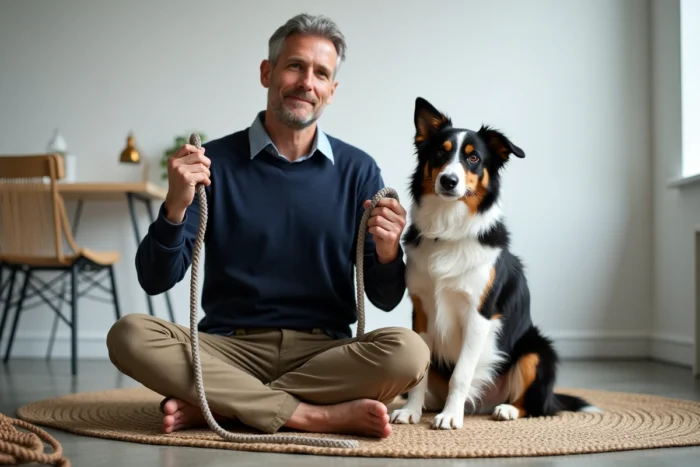
Walking Accessories: Collar, Leash, and Material Choices
The collar remains relevant for trained dogs that do not pull. Its width should be proportional to the size: a collar that is too narrow concentrates pressure on the trachea, a real risk in brachycephalic breeds. For a medium-sized dog, a width of two to three centimeters is a good compromise.
Vegetable-tanned leather ages better than chrome-tanned leather, and its patinated appearance provides an aesthetic finish that nylon cannot replicate. However, it does not withstand prolonged immersion well. Biothane, a composite material (polyester coated with PVC or TPU), combines the flexibility of leather, water resistance, and remarkable ease of cleaning. It is the material we most often see on recent high-end leashes.
Length and Type of Snap Hook
Urban walking leashes typically measure between 1.20 m and 1.50 m. Beyond that, control in the city deteriorates. Internal spring swivel snap hooks prevent the leash from twisting when the dog turns around, a point often overlooked in entry-level models.
Accessories for Dogs with Sensitive Skin: Grooming and Suitable Textiles
Allergic dogs or those with atopic skin represent an increasing share of veterinary consultations. The choice of accessories in direct contact with the skin (harnesses, coats, bedding) must take this into account.
- Shampoos with short formulations, free from synthetic fragrances and parabens, to limit skin reactions after bathing.
- Non-slip rubber mats in the grooming area, which reduce the dog’s postural stress during drying.
- Hairdryers set to warm or cool air: direct heat exacerbates irritations and dries the skin of breeds with sensitive skin (shar-pei, French bulldog, west highland).
Textiles in contact with a sensitive dog should be washed with a hypoallergenic detergent, without fabric softener. This maintenance detail also prolongs the lifespan of technical fibers.

A well-chosen canine accessory primarily addresses a morphological and dermatological constraint before satisfying an aesthetic criterion. Current ranges prove that the two are no longer mutually exclusive, provided that technical data sheets are read with the same attention as product photos.