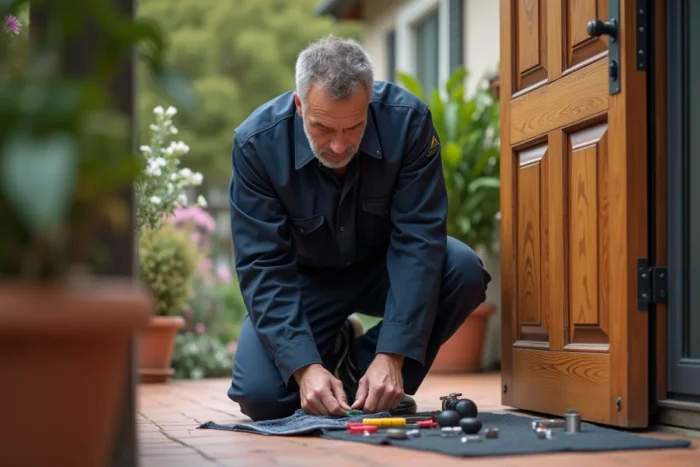
A slammed door but not locked, a shutter left ajar, a garden tool forgotten against the facade: most burglaries exploit simple vulnerabilities. Protecting your home from burglaries doesn’t require a huge budget, but a methodical approach that combines physical reinforcement, detection, and good daily habits.
Alarm response chain: what changes in 2026
Have you noticed that many tips boil down to “install an alarm”? The problem is that an alarm that sounds into the void doesn’t protect much. What makes the difference is the complete response chain after activation.
Specifically, an effective system follows three steps. First, the sensor detects a movement or an abnormal opening. Next, a verification is carried out, often via video, to confirm it’s not the cat or a draft. Finally, if the threat is confirmed, an intervention is triggered (calling law enforcement, alerting the neighborhood).
Recent remote monitoring systems integrate checks on power supply and network connection quality. Without this supervision, a burglar can cut the power or jam the Wi-Fi signal, rendering your alarm silent. Before investing, ask your installer: what happens if the power supply or internet connection goes down? The news and practical feedback published on the www Protect Habitation site regularly detail these technical points.
Physical reinforcement of access points: doors, windows, and overlooked weak spots
The vast majority of break-ins occur through the front door. Yet, many homeowners invest in a camera without checking the condition of their lock.
Lock and door: the two go hand in hand
A multi-point lock (three or five locking points) is the minimum standard. But it loses its usefulness if the door itself is weak. A sturdy lock on a hollow door only withstands a few seconds.
Also check the hinges. Hinge protectors prevent removal from the outside, a simple technique that opportunistic burglars regularly use.
Windows and sliding glass doors
Ground floor windows and sliding glass doors accessible from a garden are the second entry point. Burglary-resistant glazing (laminated type) slows down intrusion by several minutes. This delay is often enough to deter a hurried opportunist.
Lockable roller shutters add a layer of mechanical protection that many homes do not utilize. If your shutters do not lock automatically in the closed position, a simple key-operated handle can solve the problem.
Tools and ladders: an underestimated risk
A detail that advice lists often overlook too quickly: tools left accessible outside. A ladder propped against a garage wall, a screwdriver in an open storage bin, a hammer on the garden workbench – all free aids for an intruder. Always store ladders, tools, and climbing furniture in a locked storage area.
Outdoor surveillance cameras: useful but not sufficient
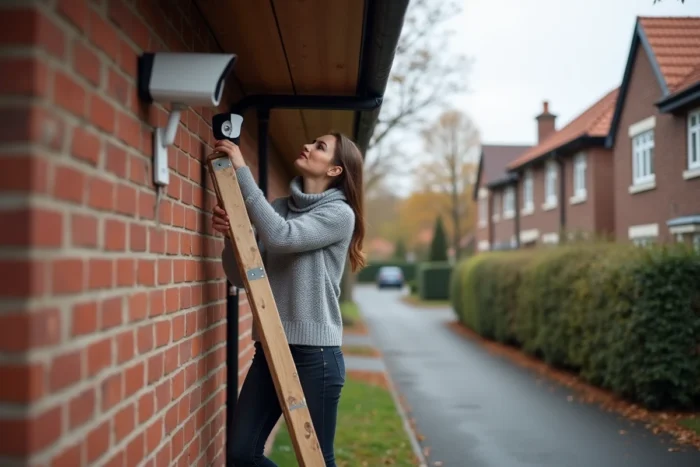
Cameras have become accessible and easy to install. However, their role is often misunderstood. A camera does not block an intrusion; it documents it.
Its real advantage is twofold: visual deterrence (a burglar who spots a camera often moves on to the next property) and proof in case of filing a complaint. For deterrence to work, the camera must be visible but out of reach.
However, a camera without recording or real-time notification loses most of its usefulness. Before purchasing, check these points:
- Is image storage local (SD card), cloud, or both? A burglar who steals the camera also takes the SD card
- Are notifications sent in real-time to your phone, with image or video capture?
- Does the system work in case of internet outage thanks to a backup cellular connection?
False alarms: the problem no one wants to manage
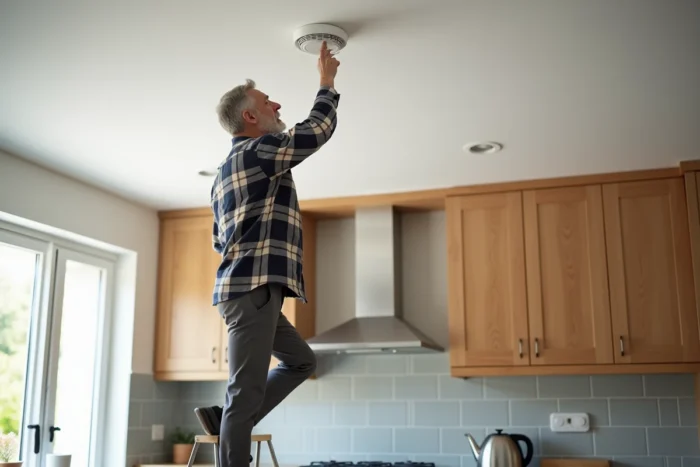
A poorly calibrated alarm system generates false triggers. After a few weeks, the natural reflex is to lower the sensitivity or disable certain zones. The system then loses its primary function.
The majority of systems disabled by their owners are due to repeated false alerts. To avoid this scenario:
- Place motion detectors away from areas where pets pass through, or choose “pet immunity” sensors
- Adjust the sensitivity of opening sensors on windows exposed to the wind
- Test your system at least once a quarter to identify malfunctions before they become a habit
- Prefer a system with video verification, which distinguishes a real intrusion from a false positive without systematic human intervention
Common disasters and home insurance: check before damage occurs
Protecting a home is not just about theft. Water damage, domestic fires, glass breakage: these common disasters cause financial damages each year that far exceed those from burglaries.
Why check your contract now, and not after the disaster? Because coverage conditions vary depending on the guarantees subscribed. Water damage caused by a defective seal may be covered or excluded depending on your plan.
Three points to check in your home insurance:
- Is the compensation ceiling for theft covering the actual value of your belongings, or a flat amount often lower?
- What are the obligations for protection measures: some insurances require a multi-point lock or an alarm system to compensate for a burglary. Without these devices, compensation may be reduced
- What is the deductible applicable to common disasters, especially for water damage, often higher than one might think
A contract reviewed once a year, ensuring that the guarantees match the actual state of the property and your belongings, avoids costly surprises. Insurance protects after the disaster, physical reinforcement protects before – the two work together, never one without the other.