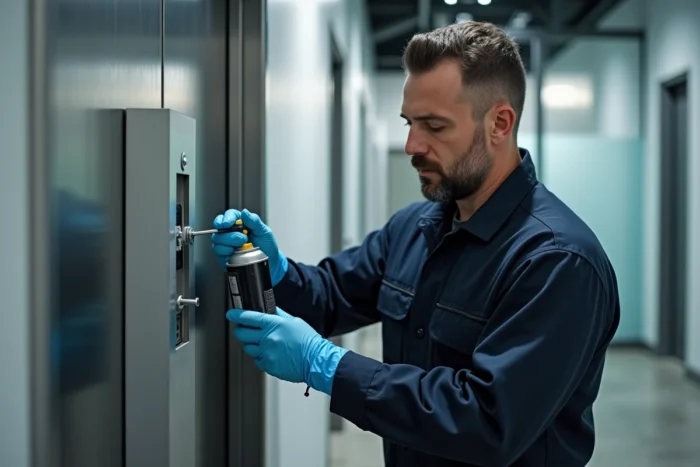
An embedded electric strike that jams in the middle of winter, on a gate exposed to the elements, is the kind of malfunction that requires an emergency locksmith. In most cases, the problem stems from a lack of regular maintenance of the mechanism. A few simple actions, performed two to three times a year, are enough to keep the device in good condition and avoid premature replacement of the lock.
Protect the electric strike’s power supply from surges
We rarely think about the power supply when discussing the maintenance of an embedded strike. The usual reflex is to lubricate the bolt or clean the strike plate. However, in an installation connected to a video intercom, an access control unit, or a gate motorization, power surges are the leading cause of silent electronic failure.
Specialized locksmiths recommend installing a small surge protector or a “surge protector” device upstream of the strike, especially on 12 or 24 V power supplies exposed outdoors. A storm, a brief power outage, and the coil or control circuit can burn out without warning.
You can find these tips for maintaining an electric strike in preventive maintenance guides aimed at professional installers. Specifically, a dedicated surge protector is inexpensive and can be wired directly to the panel or to the strike’s transformer.
If the strike is connected to an intercom or a home automation system, it is also important to check that the wiring complies with the manufacturer’s recommended sizes. An undersized wire heats up, degrades the connectors, and causes intermittent malfunctions that are wrongly attributed to the mechanism itself.
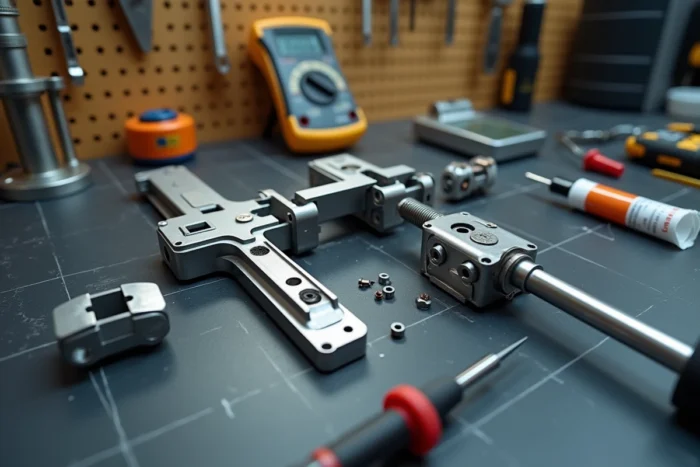
Alignment of the strike and bolt: the adjustment that prevents mechanical wear
In practice, the most common problem after a few years is a gradual misalignment between the strike and the lock bolt. The frame shifts, the hinges deform under the weight of the door or gate, and the bolt eventually forces against the strike with each closure.
This repeated friction prematurely wears out the catch area and puts abnormal stress on the coil. A more pronounced buzzing can be heard at the moment of unlocking, indicating that the mechanism is straining.
Checking alignment in practice
The process is done in two steps. First, with the door open, observe the position of the bolt in relation to the strike opening. A shift of just a few millimeters is enough to create stress. Next, activate the strike electrically and check that the bolt enters and exits without resistance.
- Check the play between the bolt and the strike housing; it should remain consistent throughout the travel
- Check the tightness of the strike plate screws, which may loosen with vibrations
- Adjust the speed and force of the door closer if the door slams or bounces against the frame
- Reposition the adjustment shims provided by the manufacturer if the frame has shifted
A poorly adjusted door closer is often the real culprit behind a failing strike. A slamming door sends repeated mechanical shocks to the bolt and strike plate, which eventually deforms the whole assembly.
Cleaning and lubricating the embedded mechanism
Dust, metal residues, and moisture accumulate in the strike housing, especially in outdoor installations (gate, metal gate). This buildup forms an abrasive paste that slows down the movement of the bolt and increases the electrical consumption of the coil.
Clean without damaging the contacts
Use an electrical contact cleaner in aerosol form, such as WD-40 Specialist Contacts, which evaporates without leaving a conductive residue. Spray it into the strike housing, let it sit for a few seconds, then wipe away the excess with a dry, lint-free cloth.
Never use thick grease on an embedded electric strike. Greasy lubricants attract dust and form a deposit that can jam the mechanism. A dry lubricant based on PTFE or silicone in spray form is preferred, applied in a very thin layer on the moving parts of the bolt.
For the outer metal part (strike plate, cover plate), a simple wipe with a lightly oiled cloth protects against oxidation. On a gate by the sea or in an industrial environment, this operation should ideally be performed every three months.

Signs of wear to watch for on an embedded electric strike
Certain signals should trigger intervention before a complete failure occurs. Ignoring them risks a blockage in the open position (safety issue) or closed position (access issue).
- An abnormal or prolonged buzzing from the coil at the moment of unlocking, indicating insufficient power supply or a jammed mechanism
- An increasing delay between the electrical impulse and the actual opening
- Visible signs of wear on the contact area of the bolt (grooves, deformation of the strike lip)
- Overheating of the housing or transformer after several closely spaced opening cycles
Feedback varies on this point, but several installers report that continuous buzzing is the first symptom to take seriously. It can indicate a power supply issue as well as a mechanical problem, and diagnosing it involves checking the voltage output from the transformer with a simple multimeter.
On current-emitting strikes (the most common in residential settings), a coil that remains energized for too long will eventually burn out. If your installation keeps the current on for the entire duration of the opening, check that this duration matches the manufacturer’s specifications.
Maintaining an embedded electric strike does not require special skills or expensive tools. A visual check of the alignment, cleaning of the contacts, appropriate lubrication, and protection against surges cover the vast majority of failure causes. These actions, spread over two or three annual interventions, allow the mechanism to maintain its responsiveness and reliability throughout its lifespan.