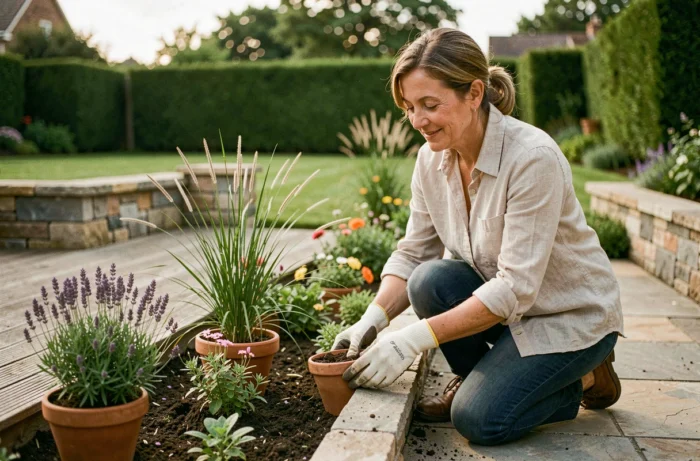
A successful outdoor layout relies on a careful reading of the terrain: soil, exposure, and uses guide every decision even before choosing furniture or flooring. Before selecting a garden lounge or laying a terrace, the reading of the terrain influences every decision, from the flooring to the plants. Here’s how to structure a coherent, sustainable outdoor layout project that aligns with this year’s trends.
Matrix Planting: The Technique That Changes Garden Management
Matrix planting is the strong reference for outdoor layouts in 2026. The principle: mix grasses and perennials of similar height in the same bed, densely, to naturally cover the ground.
This densification limits the growth of weeds, reduces the need for watering, and creates a naturalistic effect very different from the traditionally aligned beds. One selects a structural grass (such as fescue or miscanthus depending on the region) and intersperses flowering perennials suited to the exposure.
The result requires less maintenance than a lawn mowed every week. To explore the ranges of plants and materials suitable for this type of project, planning your outdoor layout with Tout pour le Jardin allows you to target supplies without spreading the budget too thin.
A well-designed matrix bed requires weeding only once or twice per season, compared to almost monthly intervention for a traditional flowerbed. Less maintenance, more biodiversity, less water: the equation is straightforward.
Choosing Terrace and Outdoor Flooring Materials: Balancing Durability and Use
The flooring represents the aspect that conditions all others. A poor choice of material generates recurring maintenance costs or rapid degradation.
Wood, Composite, Porcelain Stoneware, or Natural Stone
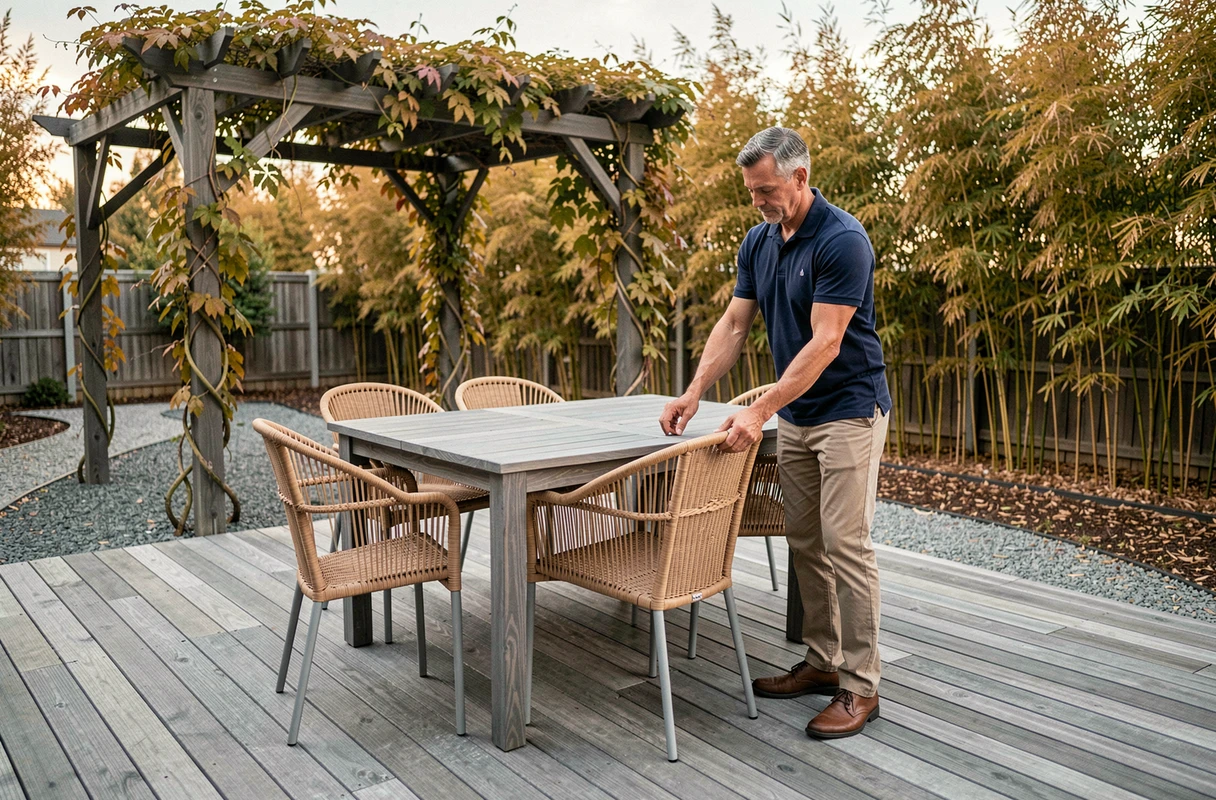
Each material serves a specific use. Solid wood ages well but requires regular treatment. Composite wood withstands moisture better without annual maintenance. Porcelain stoneware resists frost and stains, making it suitable for poolside areas. Natural stone offers a unique appearance, but its price and installation are more demanding.
- Dining terrace or summer kitchen: prioritize porcelain stoneware or reconstituted stone, easy to clean after grease splashes
- Barefoot area (pool, sunbathing): composite or smooth non-slip stone avoids splinters and burns
- Frequent passage path: interlocking pavers or permeable asphalt absorb traffic without deforming
- Shaded and damp terrace: avoid raw wood that greens quickly, prefer composite or outdoor tiles
The 2026 trend confirms the return of reclaimed or reused materials: old bricks for borders, recycled sleepers for boundaries, local stone for low walls. This choice reduces the construction footprint while providing a patina that new materials cannot replicate.
Irrigation and Water Management: A Design Criterion, Not an Accessory
Watering is no longer a question of comfort. With drier and more irregular summers, irrigation becomes a structuring parameter of the layout plan. Placing an outdoor tap in an arbitrary location and dragging a hose is no longer sufficient.
Drip systems or connected watering allow targeting each area according to its actual needs. A matrix bed consumes little. A freshly planted hedge requires regular monitoring in the first year. A square vegetable garden needs daily watering in the height of summer.
Integrate Water from the Zoning Plan
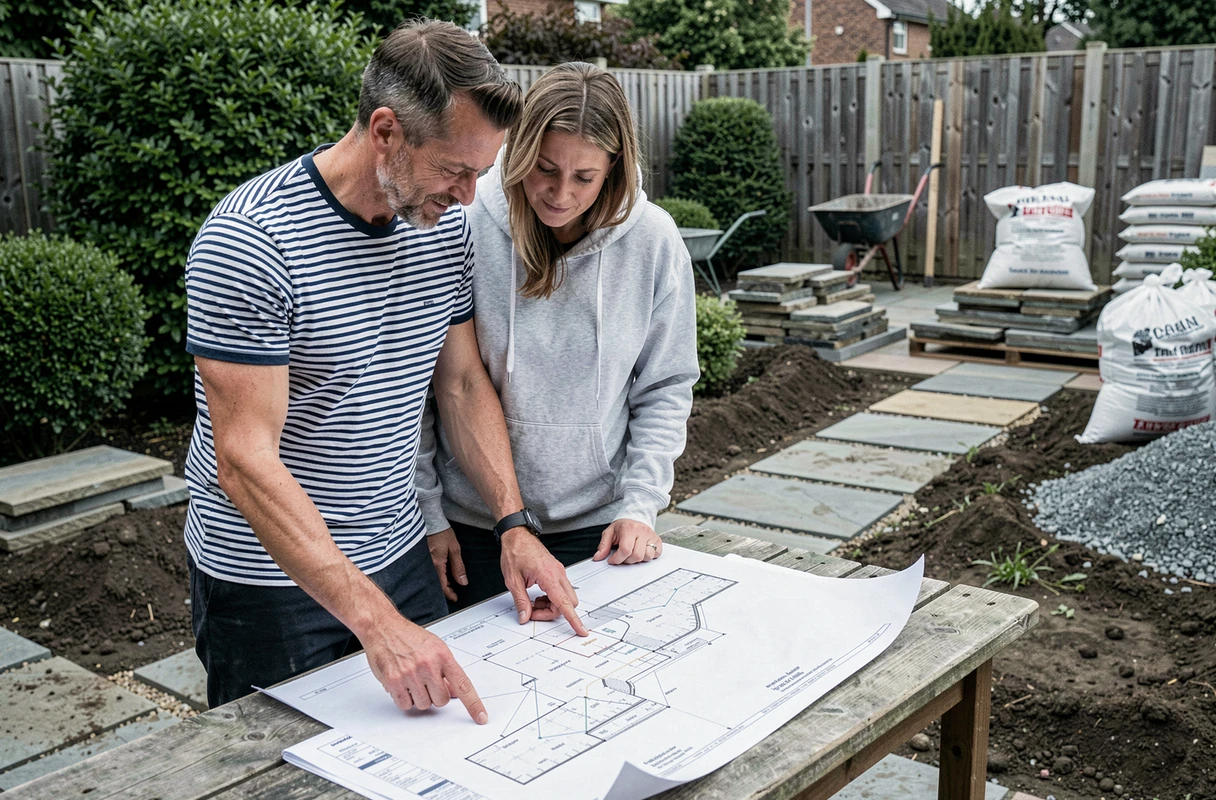
Tracing the irrigation network at the same time as the paths and living areas avoids breaking a terrace two years later to run a hose. Planning a rainwater collection tank near the downspouts completes the system. A water-efficient garden is designed before the first planting, not after the first heatwave.
Outdoor Lighting and Furniture: Creating Distinct Living Areas
Illuminating a garden is not about placing spots everywhere. Good outdoor lighting defines atmospheres and extends the use of each area after sunset.
Three levels are sufficient in most configurations:
- Functional lighting along paths and at access points (low bollards or recessed floor lights), powered by solar or low voltage
- Ambient lighting over the dining area or garden lounge (string lights, pendants, rechargeable table lamps)
- Accent lighting on a tree, a green wall, or a facade to structure the nighttime perspective
The choice of garden furniture follows the same zoning logic. A large table near the outdoor kitchen, low chairs in a shaded corner, a bench integrated into a low wall for small spaces. Each piece of furniture has its place because the area was thoughtfully designed in advance.
The 2026 design favors clean lines, natural tones, and materials that can be left outdoors without a cover. Treated aluminum, high-density woven resin, and untreated teak (which naturally grays) dominate current selections.
An outdoor layout that works over time is recognized by one detail: each element, from the flooring to the lighting, has been chosen in response to an identified constraint on the terrain. The parasol is anchored where the sun hits at lunchtime, not at the geometric center of the terrace.
The hedge grows where there is a view, not on all four sides. This reading of the terrain, done once at the start, avoids most costly corrections in the following years.